



Ruminal Acidosis
Ruminal Acidosis
What is ruminal acidosis in calves?
Ruminal acidosis in calves is a condition often brought on by ruminal drinking due to failure of the oesophogeal groove to close during intake of milk, resulting in milk entering the rumen instead of the abomasum, or reflux of abomasal content. This results in fermentation of the milk in the rumen leading to a reduction of rumen pH and ruminal acidosis.
Causes of ruminal acidosis in calves:
This can be brought on by a range of factors; the majority being calf management factors, though on a rare occasion it can be a congenital malfunction of the oesophageal groove. Generally, calves are creatures of habit and changes in housing and environment can affect closure of oesophageal groove. Management factors which can make ruminal drinking and thus ruminal acidosis more likely include but are not limited to:
* Irregular feeding times
* Irregular or inappropriate milk temperatures
* Low quality milk replacer
* Inappropriate stomach tube feeding
o stomach tubing calves with milk other than their colostrum feed is not recommended, as the milk will tend to directly enter the rumen which can lead to lactic acidosis and immune depression providing an environment for bacterial and fungal growth.
* Stress incidents, including transportation
* Illness such as diarrhoea
* Feeding waste milk
* Lack of access to clean fresh water
Clinical signs of ruminal acidosis in calves:
Clinical signs of ruminal acidosis in calves are caused by the failure of proper digestion of milk or milk replacer due to fermentation of the milk within the rumen leading to a reduction of rumen pH and production of volatile fatty acids and lactic acid within the rumen. Signs include:
* Milk refusal by calves that are limit-fed milk is a sign of potential problem with rumen drinking/acidosis
* Signs of abdominal discomfort or colic
* Dehydration
* Bloat
* Poor growth
* Depression
* Pale, putty-like faeces
* Poor coat
What to do about ruminal acidosis in calves
Prevention is the best cure for this condition and adherence to rigorous feeding protocols is number one in preventing ruminal acidosis. If ruminal acidosis is suspected it is vital to closely assess management practices to ensure stresses and variations of the routine are minimised. Ensure that
feeding equipment is closely scrutinised e.g. check for failure of automatic calf feeders or irregularly large holes in older teats. Other housing issues can also cause stress, such as overcrowding, and these factors should also be looked at and where possible alleviated.
It is important to ensure that any affected calves are treated symptomatically. For mild cases it may be appropriate to stop feeding milk and address acidosis. However, in some cases more extreme interventions may be needed such as IV fluids or other appropriate medications. Please remember that illness may be the primary cause of this condition and that these calves will be immunosuppressed, so they are susceptible to secondary infections. In the case of chronic ruminal feeders, early weaning may be necessary to help these calves.
Treatment and management of these cases should be discussed with your private veterinary practitioner.
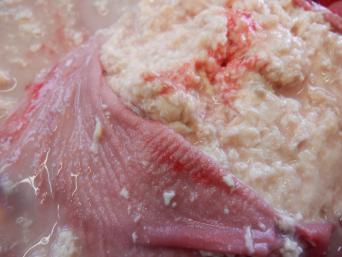
Milk in the rumen of a calf (rumen drinker)
Image courtesy of Kilkenny RVL